
The 2026 field hockey season introduces significant rule changes focused on player safety and consistent officiating, with the National Federation of State High School Associations (NFHS) leading updates to mouthguard standards and penalty corner procedures.
Key Takeaway
-
2026 NFHS rule changes focus on player safety with stricter mouthguard standards and penalty corner procedures
-
Mouthguards must not include non-functional attachments that pose health risks
-
Penalty corner substitutions now limited to goalkeeper safety situations only
-
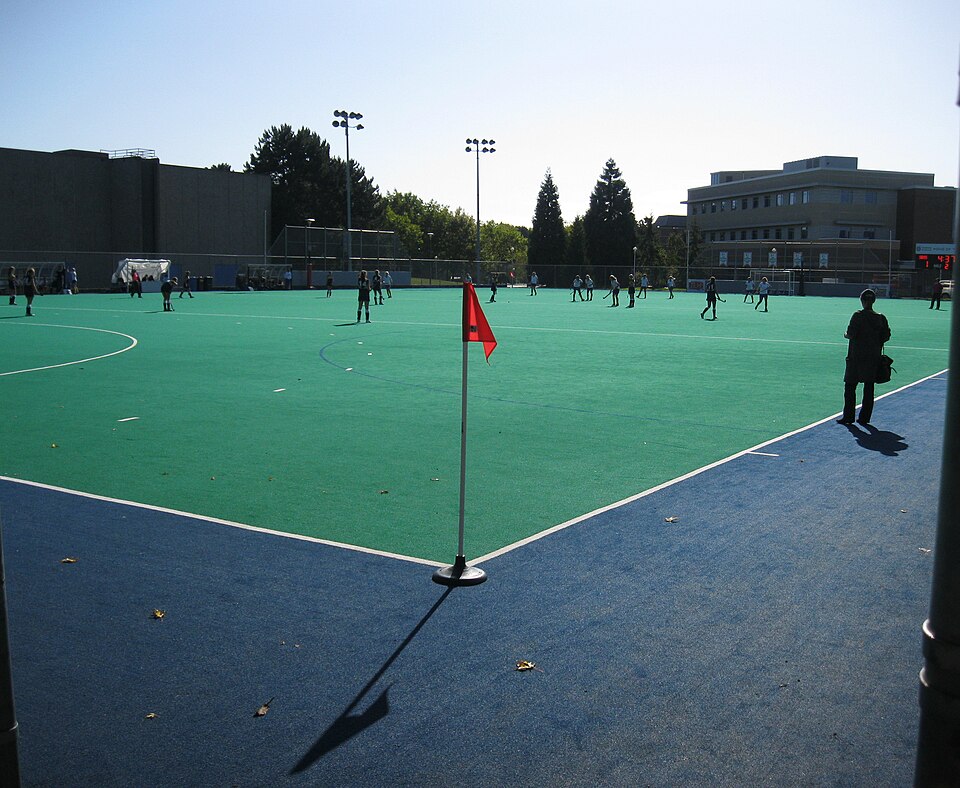
Field hockey is played by two teams of eleven players using flat-sided sticks on a 91.4m x 55m pitch
2026 NFHS Field Hockey Rule Changes: What’s New
Mouthguard Standards (Rule 1-6-1): No Non-Functional Attachments
The 2026 NFHS rule changes clarify that mouthguards must serve a clear protective purpose without any non-functional additions. The updated Rule 1-6-1 specifically prohibits mouthguards from including attachments that don’t contribute to protecting the teeth and mouth.
These changes reflect a growing emphasis on player safety across all youth sports. The NFHS conducted extensive research showing that decorative elements on mouthguards can create hazards during play, including potential choking risks or interference with proper fit. Schools and leagues are now required to check mouthguards during pregame equipment inspections.
The new standards apply to all levels of play governed by NFHS rules, from high school varsity teams to junior varsity and freshman squads. Coaches must educate players about acceptable mouthguard designs, and equipment managers need to verify compliance before games begin. Some manufacturers have already released “2026 compliant” mouthguards specifically designed to meet these updated requirements. Players should also ensure their overall gear meets current standards by consulting a field hockey equipment guide before the season starts.
-
Mouthguards must not include attachments that don’t contribute to protective purpose – only features that serve a clear safety function are allowed
-
Decorative items, toggles, or style-focused features are forbidden – any non-protective elements are prohibited
-
Any feature posing health risk to wearer or other players is prohibited – safety is the sole purpose of mouthguard design
-
Pre-game equipment checks now include mouthguard inspection – officials verify compliance before matches begin
-
Violations result in player removal from game – non-compliant mouthguards mean players cannot participate
-
Schools must maintain documentation of mouthguard compliance – records kept for liability and safety purposes
-
Training required for coaches on new equipment standards – education programs implemented before season
Penalty Corner Substitutions (Rule 4-4-3): Goalkeeper-Only Exceptions
The 2026 updates to Rule 4-4-3 significantly restrict substitutions before and during penalty corners to improve game flow and consistency. These changes create clearer boundaries for when players can enter or leave the field.
Prior to these changes, teams could make multiple substitutions before penalty corners, sometimes disrupting the defensive setup and creating confusion. The new rules eliminate this practice, ensuring both teams have equal opportunity to prepare for the set piece. This change also speeds up game play by reducing delays.
Coaches must now develop strategies that account for these substitution limitations. Teams cannot make tactical changes specifically for penalty corners, which means players must be versatile enough to handle multiple game situations. The restriction particularly impacts teams that relied on specialized defensive units for penalty corner situations.
-
Substitutions allowed prior to penalty corner limited to goalkeeper safety situations – only goalkeeper illness, injury, suspension, or disqualification permits substitution
-
No substitutions permitted during penalty corner for any reason – field players cannot be substituted even for illness or injury
-
Exceptions apply to ill, injured, suspended, or disqualified goalkeeper only – goalkeeper substitutions remain the sole exception to the no-substitution rule
-
Teams must declare goalkeeper substitutions before penalty corner setup – advance notice required to officials
-
Violations result in penalty against offending team – improper substitutions lead to disciplinary action
-
Strategic planning must account for substitution limitations – coaching adjustments required
-
Player versatility becomes more important – specialized roles reduced in importance
Field Hockey Game Structure and Equipment
Team Composition and Field Dimensions
Field hockey is played between two teams of eleven players each, consisting of ten field players and one goalkeeper. The game takes place on a rectangular pitch that measures 91.4 meters in length and 55 meters in width. For those looking to join a local team, a field hockey club can provide structured play and coaching opportunities.
The field features specific markings including shooting circles (also called D’s) at each end, penalty spots, and center lines. The shooting circle is a semi-circular area with a radius of 14.63 meters from the goal center. Goals are 3.66 meters wide and 2.14 meters high, with boards around the bottom to keep the ball in play.
Matches typically consist of four quarters of 15 minutes each, with short breaks between quarters and a longer halftime break. Teams switch ends after each quarter to ensure fairness regarding field conditions and wind direction. The clock stops for penalty corners and other specific situations to maintain game timing accuracy.
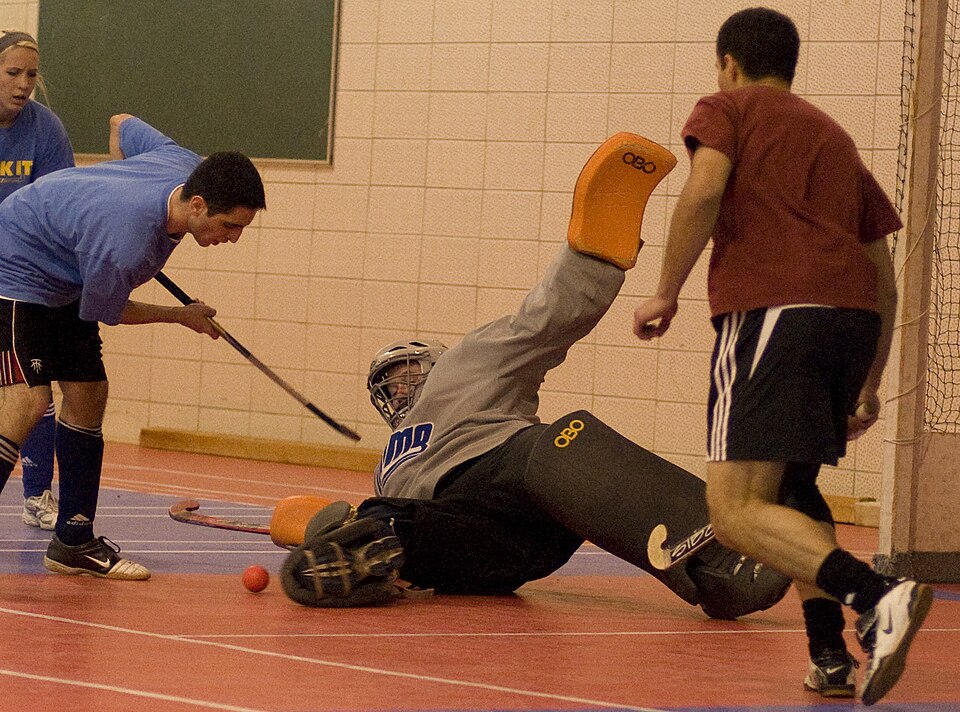
Player positions include forwards, midfielders, defenders, and a goalkeeper. Each position has specific responsibilities, though modern field hockey emphasizes versatility. Forwards focus on scoring, midfielders control the game’s flow, defenders prevent goals, and the goalkeeper protects the net using specialized equipment.
Stick Design and Ball Handling Rules
Field hockey sticks have a distinctive design with one flat side and one rounded side. Players can only use the flat side of the stick to play the ball – using the rounded side results in a penalty, though accidental touches are sometimes allowed depending on the situation.
The ball used in field hockey is hard plastic, typically white, with a circumference of about 224-235mm and weight between 156-163 grams. Players must use their sticks to control, pass, and shoot the ball – using feet or other body parts (except for goalkeepers in their circle) results in a foul.
Stick handling techniques include dribbling, pushing, flicking, and hitting. Each technique requires specific wrist and arm movements to control the ball effectively. Advanced players develop skills like aerial dribbling and reverse stick handling to create scoring opportunities. Beginners can improve these skills through Essential Field Hockey Training Drills that focus on fundamental techniques.
-
Stick has flat side and rounded side; only flat side can play ball – this is the fundamental rule of stick usage
-
Using rounded side results in penalty (accidental touches allowed) – intentional use of the wrong side is penalized
-
Goalkeepers can use any body part inside shooting circle – goalkeepers have special privileges within their defensive area
-
Ball must be played with stick below shoulder height – high sticks are penalized for safety
-
Players cannot shield the ball with body – obstruction fouls occur when blocking opponents from playing the ball
-
Three-touch rule applies in some youth leagues – limits consecutive touches by individual players
-
Backsticks are prohibited – playing the ball on the wrong side of the stick is illegal
Penalty Corner Procedures and Fouls
When Penalty Corners Are Awarded
Penalty corners, also known as short corners, are awarded in specific situations to provide the attacking team with a scoring opportunity. These set pieces are crucial moments in field hockey matches. Understanding when and why penalty corners are awarded requires knowledge of the complete field hockey rules and regulations that govern the game.
A penalty corner is awarded when a defender commits a foul within the shooting circle or intentionally sends the ball over the end line. The attacking team gets to take a shot from the corner of the field with only the goalkeeper and four defenders positioned behind the goal line to defend.
Common fouls that result in penalty corners include intentional obstruction, dangerous play, or preventing a probable goal. The penalty corner provides a structured opportunity for the attacking team to score, making it one of the most important aspects of field hockey strategy.
During a penalty corner, the ball is placed on the back line approximately 9.14 meters from the nearest goal post. One attacking player inserts the ball to a teammate waiting near the top of the shooting circle. All other attackers must be outside the circle until the ball is played.
2026 Penalty Corner Encroachment Rules
The 2026 rule changes address encroachment during penalty corners to increase consistency in officiating. These adjustments aim to reduce confusion and ensure fair play during these critical game moments.
Under the new rules, if an attacking player enters the shooting circle before the ball is inserted, the inserter must go beyond the center line. This change eliminates the previous practice of penalizing the specific player who entered early, instead focusing on team positioning and game flow.
The updated rules also clarify that defenders must remain behind the goal line until the ball is played. This ensures the attacking team has a fair opportunity to execute their penalty corner strategy without immediate pressure from defenders.
-
If attacker enters circle early, inserter goes beyond center line – specific consequences for early entry by attacking players
-
Specific offending player no longer penalized for early entry – the focus shifts from individual penalties to team positioning
-
Aims to increase consistency in officiating dead-ball situations – reduces subjective interpretation by officials
-
Defenders must remain behind goal line until ball is played – ensures fair defensive setup
-
Ball must travel outside circle before shot on goal – prevents immediate scoring attempts
-
Time limits implemented for penalty corner execution – keeps game moving efficiently
-
Substitution restrictions apply during penalty corners – maintains fairness in player availability
The most surprising finding is that 2026 rule changes focus heavily on simplifying enforcement rather than adding complexity. By limiting substitutions to goalkeeper-only situations and clarifying encroachment penalties, the NFHS aims to make games more consistent and easier to officiate. For players and coaches, the key action step is to review these updated rules before the season starts and ensure all equipment meets the new mouthguard standards – particularly checking that no non-functional attachments are present on protective gear.
