
Hockey traces back 4,000 years to ancient Egyptian stick-and-ball games, with archaeological evidence showing early civilizations playing similar games across cultures. From Egyptian tombs to modern Olympic competition, the sport evolved through centuries of cultural exchange and standardization, becoming the global field hockey we know today. This hockey history shows how ancient games transformed into modern sport.
Key Takeaway
-
Hockey traces back 4,000 years to ancient Egyptian stick-and-ball games
-
Modern field hockey developed in 19th-century England with Blackheath Club (1849)
-
The sport spread globally through British military influence and became Olympic in 1908
Ancient Origins: The First Stick-and-Ball Games
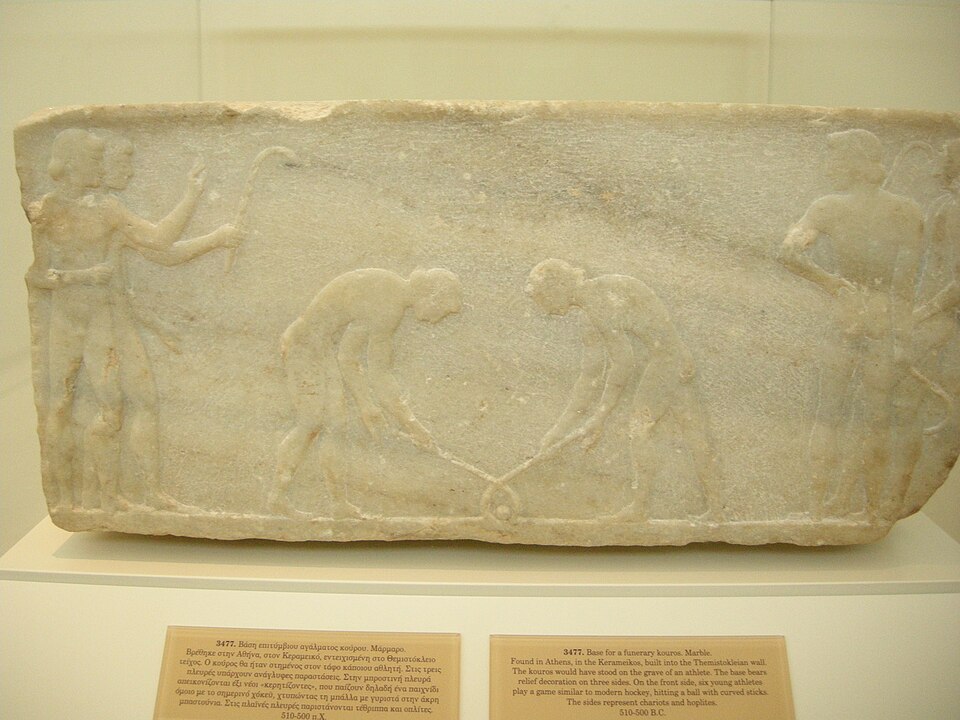
Archaeological discoveries reveal that stick-and-ball games predate modern civilization by millennia, with evidence spanning multiple continents and cultures. These ancient games share remarkable similarities despite developing independently across vast distances, suggesting a universal human attraction to this basic sporting concept.
4,000-Year-Old Egyptian Drawings Show Early Hockey-Like Games
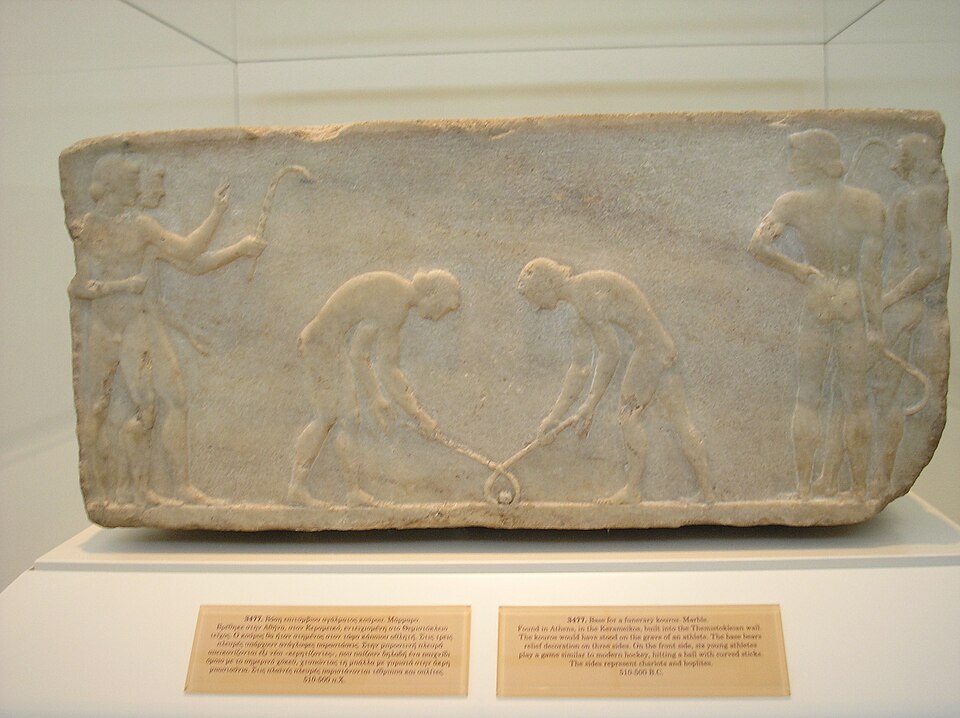
Egyptian tombs contain 4,000-year-old drawings depicting people playing games with curved sticks and balls, providing the earliest documented evidence of hockey-like activities. These ancient Egyptians used wooden sticks to hit balls across playing fields, establishing the fundamental concept that would evolve into modern hockey. The tomb paintings show organized games with multiple players, spectators, and what appears to be structured competition. Similar games emerged independently in other civilizations, with an ancient Greek relief from around 500 BC showing men playing with curved sticks in what appears to be a competitive setting. The Aztec civilization also developed stick-and-ball games, demonstrating how this basic sporting concept arose across different cultures without direct contact. Archaeological evidence from various sites shows that these games served both recreational and ceremonial purposes, with some cultures incorporating religious elements into their stick-and-ball traditions. Modern players develop stick handling techniques that build on these ancient foundations.
Ancient Games Across Civilizations: Egypt, Greece, and Beyond
-
2000 BC ancient Egypt stick-and-ball games: Tomb paintings show organized games with sticks and balls, complete with spectators and structured play areas
-
500 BC ancient Greek relief: Depicts men playing with curved sticks in competitive format, suggesting formalized rules even in ancient times
-
Similar games in ancient Rome: Romans played paganica, using curved sticks to hit balls, often as part of military training exercises
-
Aztec cultures: Developed tlachtli, a stick-and-ball game with religious significance, where winners sometimes earned high social status
-
Asian variations: Persian and Chinese cultures had their own stick-and-ball traditions, with some games dating back over 3,000 years
-
African traditions: Various African cultures developed their own versions of stick-and-ball games, often tied to community celebrations
-
European folk games: Medieval European villages played numerous stick-and-ball variants that evolved into modern sports
Modern Field Hockey: From England to Global Sport
The transformation from ancient stick games to modern field hockey occurred primarily in 19th-century England, where the sport gained structure, rules, and organized competition. This period marked the birth of the game as we recognize it today, with formal institutions creating the framework for global expansion.
Blackheath Club and the Birth of Modern Field Hockey
The modern game took shape in England during the 1800s, with Blackheath Football and Hockey Club forming in 1849 and often cited as the first organized hockey club. This establishment marked a crucial turning point, as informal games began transitioning into structured sport. The club’s formation came during a period of rapid industrialization and social change in Britain, when working-class leisure time increased and organized sports became more popular. Rules were formalized at Eton in 1868, creating standardized guidelines for play that would spread throughout the country. The UK Hockey Association was created in 1886, further cementing the sport’s organizational foundation. These developments transformed hockey from casual recreation into a regulated competitive activity with defined playing surfaces, equipment specifications, and gameplay rules. The standardization process involved debates about stick dimensions, ball weight, playing field size, and scoring systems that continue to influence the game today. Players today choose from various hockey sticks designed for different playing styles.
Olympic Debut and Global Spread Through British Influence
-
1908 Hockey first appeared as men’s competition at the Olympics: London hosted the debut of field hockey as an Olympic sport, with England, Ireland, Scotland, and Wales competing as separate teams
-
British military influence: Soldiers stationed abroad introduced the game to colonies, with British officers teaching hockey in India, Africa, and the Caribbean
-
India and Pakistan: Became dominant forces in international hockey competition, with India winning six consecutive Olympic gold medals from 1928 to 1956
-
Australia and New Zealand: Adopted the sport through British colonial connections, developing their own playing styles and competitive traditions
-
Evolution of equipment: Specialized sticks, balls, and protective gear developed over time, with modern composite materials replacing traditional wood
-
International leagues: Professional and amateur competitions emerged worldwide, creating pathways for player development and international rivalry
-
Women’s hockey: Gained recognition later, with women’s Olympic hockey added in 1980 after decades of grassroots development
Where Did Modern Field Hockey Originate?
England served as the birthplace of modern field hockey, where 19th-century developments transformed ancient stick games into the organized sport played globally today. The British Isles provided the perfect environment for standardization and growth, with their combination of educational institutions, colonial reach, and industrial innovation.
England: The Birthplace of Modern Field Hockey Rules
Modern field hockey developed in 19th-century England through a series of key institutional developments. The first organized club, Blackheath, formed in 1849, creating a model for other clubs to follow. This timing coincided with the Victorian era’s emphasis on organized recreation and moral education through sport. Rules were formalized at Eton in 1868, establishing consistent gameplay standards that replaced the varied local traditions that had existed for centuries. The UK Hockey Association’s creation in 1886 provided national governance, while British public schools promoted the sport among students as part of their physical education programs. These educational institutions played a crucial role in spreading hockey throughout England and eventually to other parts of the British Empire. The combination of club formation, rule standardization, and educational promotion created the foundation for modern field hockey. The process involved extensive debate about fair play, player safety, and competitive balance that continues to shape the sport’s evolution. Recent hockey rules updates reflect this ongoing refinement of the game.
From Colonial Pastime to Global Competition
-
British military influence: Soldiers stationed in colonies taught the game to local populations, often using hockey as a tool for building discipline and teamwork
-
Indian subcontinent: Hockey became immensely popular, with India dominating international competition and developing distinctive playing techniques
-
Australian development: The sport flourished in Australian schools and clubs, with the country becoming a consistent medal contender in international tournaments
-
New Zealand adoption: Hockey spread through British immigrant communities, eventually becoming one of the country’s most popular sports
-
Equipment evolution: Specialized sticks, balls, and playing surfaces developed for different conditions, with innovations in materials and design improving performance
-
International competitions: World Cups and other tournaments emerged to test national teams, creating a global hockey calendar that attracts millions of viewers
-
Professionalization: The sport evolved from amateur pastime to professional competition, with players now able to earn livings through hockey
The most surprising finding is that hockey’s ancient origins span multiple civilizations that had no contact with each other, suggesting a universal human attraction to stick-and-ball games. This independent development across cultures reveals how fundamental these games are to human recreation and competition. To explore hockey’s rich history further, visit the Marden Russets Hockey Club website, where you can learn about local hockey traditions and connect with the sport’s ongoing legacy in our community. Teams practice hockey drills that build on thousands of years of stick-and-ball game evolution.
Frequently Asked Questions About Hockey History Origins
Where did modern field hockey originate?
Modern field hockey originated in England, evolving from ancient stick-and-ball games played as early as 2000 BC in ancient Egypt and depicted in a 500 BC Greek relief. The sport developed into its modern form in England before becoming a global competition. Strategic elements like power play strategies emerged as the game evolved and teams developed sophisticated offensive tactics.
When did hockey first appear in the Olympics?
Hockey first appeared as a men’s competition at the Olympics in 1908, marking its introduction to the global sporting stage. This Olympic debut came after decades of development in England, where the sport had evolved from ancient stick games into a structured competitive activity. The 1908 London Games featured teams from England, Ireland, Scotland, and Wales competing as separate nations, reflecting the sport’s British origins. Since then, hockey has become a regular Olympic fixture, with nations from around the world competing for gold medals. The Olympic platform has helped standardize rules and promote international competition. Players today follow rigorous hockey training programs to prepare for Olympic-level competition.
What are the ancient origins of hockey?
The ancient origins of hockey trace back to stick-and-ball games played over 4000 years ago, with evidence from 2000 BC in ancient Egypt and a 500 BC Greek relief showing early forms of the sport.
