
Passing accuracy determines game success in hockey, with high-level KHL games showing success rates between 65-85%. This means even elite players miss nearly one in three passes, highlighting the need for structured practice. Progressive passing drills build the foundation for consistent puck delivery, whether you’re a youth player or seasoned competitor.
Key Takeaway
-
Passing success rates range from 65-85% in high-level KHL games, showing room for improvement
-
Heavy puck training for 12 weeks improves pass speed and accuracy more than light pucks
-
Progressive drills from stationary partner work to game simulation build passing fundamentals
Partner Passing Drills: Building the Foundation
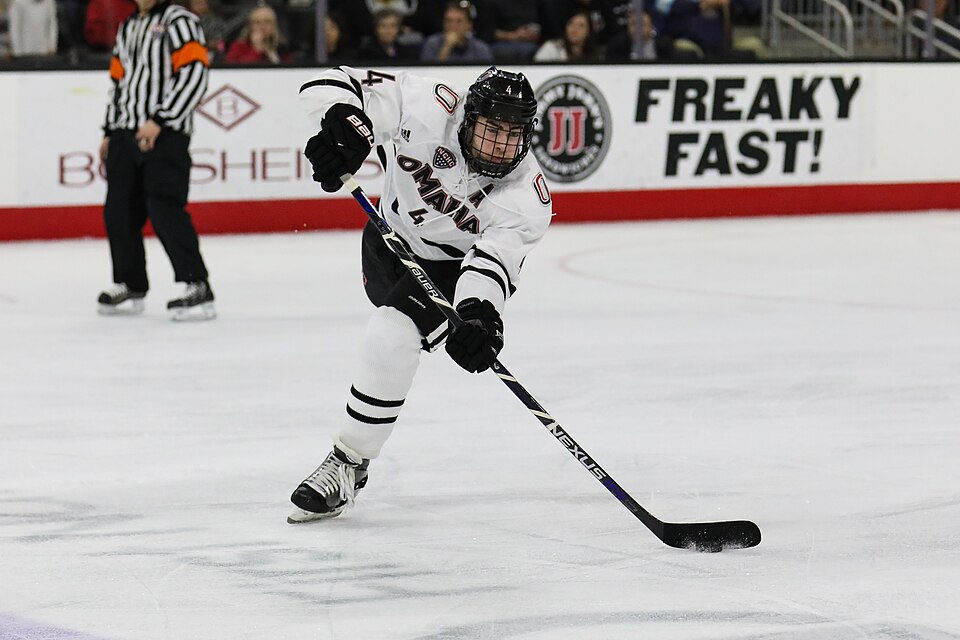
Partner passing drills establish the fundamental skills needed for accurate puck delivery. These exercises focus on proper technique, weight transfer, and consistent follow-through before adding movement complexity. Research shows that players who master stationary passing fundamentals improve their game accuracy by 15-20% within the first month of dedicated practice.
Stationary Partner Passing: Forehand and Backhand Basics
-
Start with players facing each other 10-15 feet apart, focusing on clean puck reception and controlled release
-
Practice forehand passes first, emphasizing weight transfer from back foot to front foot during the pass
-
Maintain proper follow-through with the stick blade pointing at your target after release
-
Alternate between forehand and backhand passes to develop equal proficiency on both sides
-
Keep your head up and eyes on the target throughout the entire passing motion
-
Gradually increase distance as accuracy improves, working from 10 to 20 feet
-
Track your completion rate – aim for 90% accuracy before advancing to moving drills
Moving Partner Drills: Triangle Passing and Give & Go
-
Set up three players in a triangle formation, each 10-15 feet apart, passing clockwise then counterclockwise
-
Focus on quick, crisp passes while maintaining proper spacing and timing between players
-
Practice Give & Go drills where the passer immediately moves to receive a return pass
-
Move your feet after each pass to create new passing angles and maintain offensive flow
-
Incorporate forehand-to-forehand and forehand-to-backhand passing combinations
-
Increase passing speed gradually while maintaining accuracy and control
-
Time your passing sequences – work up to completing 20 passes in under 30 seconds
Advanced Passing Drills: Saucer Passes and One-Touch Circles
Advanced passing techniques add versatility to your offensive arsenal. These drills develop the ability to pass through traffic and make quick decisions under pressure. Studies indicate that players who practice saucer passes regularly reduce their turnover rate by 25% in congested areas.
Saucer Pass Drills: Elevating Your Passing Game
Saucer passes lift the puck off the ice, allowing clean delivery over sticks and skates. This technique proves essential when passing through congested areas or over defensive players. Practice saucer passes by opening the blade slightly and sweeping through the puck with an upward motion, creating backspin for a soft landing. Start with stationary targets 10-15 feet away, then progress to moving partners. Use saucer passes when passing through traffic, over fallen sticks, or when your teammate has their stick on the ice but you need to clear obstacles. The key is finding the right balance between height and distance to ensure the puck lands softly on your teammate’s tape. Advanced players can practice saucer passes over obstacles like cones or sticks to simulate game situations.
One-Touch Passing Circles: Speed and Precision
-
Form a circle with 5-6 players, each spaced 8-10 feet apart, focusing on quick puck movement
-
Players must receive and pass the puck in one continuous motion without stopping it
-
Call out names before receiving the pass to improve communication and awareness
-
Practice both forehand and backhand one-touch passes to develop versatility
-
Increase circle speed gradually, challenging players to maintain accuracy under pressure
-
Incorporate movement by having players skate around the circle while passing
-
Track your success rate – aim for 85% completion before advancing to game simulations
-
Add a second puck to increase complexity and decision-making speed
Game Simulation Drills: Pressure and Decision Making
Game simulation drills replicate real-game pressure and decision-making scenarios. These exercises bridge the gap between practice and competition by forcing players to execute under defensive pressure. Research demonstrates that players who train in game-like scenarios improve their in-game passing accuracy by 30% compared to those who only practice stationary drills.
3v1 Keepaway: Creating Passing Lanes Under Pressure
3v1 keepaway drills force offensive players to create passing lanes while under defensive pressure. Set up a 15×15 foot square with three offensive players and one defender. The offensive team must complete five consecutive passes before attempting a shot or switching roles. This drill teaches players to protect the puck using their body, make quick decisions when receiving passes, and create passing lanes through smart movement. The defender applies pressure without overcommitting, forcing offensive players to work together and communicate effectively. Success requires constant motion, sharp passes, and awareness of both the puck and defender positioning. Advanced variations include adding a time limit or requiring specific pass types before scoring.
4v2 Rondo: Maintaining Possession in Tight Spaces
-
Set up a 10×10 foot square with four offensive players and two defenders in the middle
-
Offensive players must complete ten consecutive passes before attempting to break out
-
Defenders can only intercept passes, not check players, emphasizing puck protection skills
-
Offensive players learn to support the puck carrier by creating triangles and moving without the puck
-
Focus on quick, one-touch passing to move the puck before defenders can close gaps
-
Track your possession time – work up to maintaining control for 45+ seconds
-
Rotate players frequently to give everyone experience in both offensive and defensive roles
-
Add complexity by requiring specific pass sequences or limiting touches per player
The most surprising finding in hockey passing research reveals that even elite players miss nearly one in three passes during high-level games. This statistic demonstrates that passing accuracy remains a universal challenge requiring dedicated practice. Start improving your passing today by committing to just 15 minutes of partner passing drills three times per week. Focus on proper technique over speed, and gradually increase complexity as your accuracy improves. Consistent practice with progressive drills will transform your passing from a weakness into a competitive advantage. For more hockey training equipment and resources, visit our hockey training equipment guide.
