
Field hockey demands a unique blend of aerobic endurance, anaerobic power, and explosive strength to keep up with the game’s intense pace. Players need specialized fitness training that builds the specific energy systems and movement patterns required for optimal performance on the field, building on the sport’s rich history that has evolved over centuries.
Key Takeaway
- Field hockey demands hybrid training: 50% aerobic, 20% lactic, 30% phosphate energy systems
- Players cover 6+ miles per match with frequent sprints requiring specialized conditioning
- 12-week functional strength training improves muscle strength, endurance, and body composition
- Position-specific training: forwards need sprints/plyos, midfielders need endurance, defenders need lateral strength
Energy Systems and Training Demands in Hockey
Understanding the 50-20-30 Energy Split
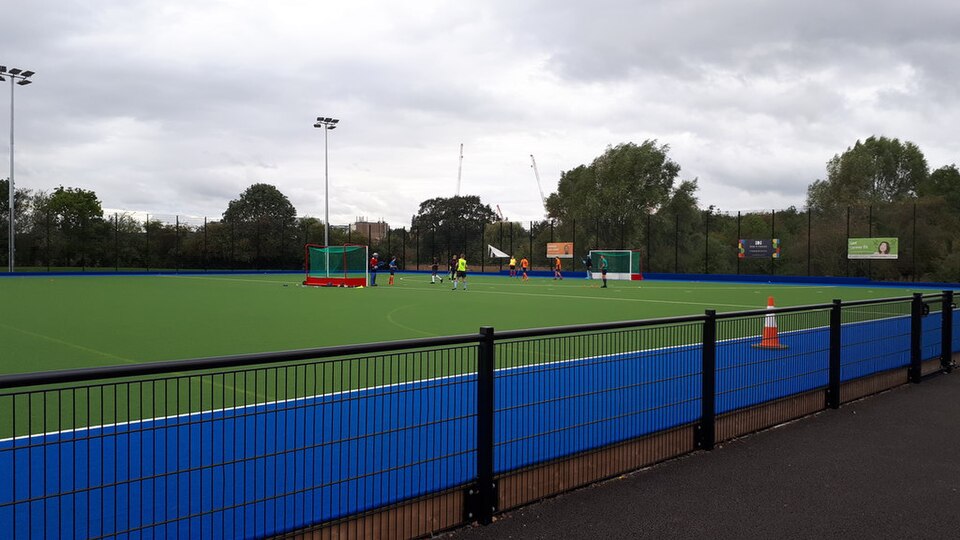
Field hockey requires a unique energy system balance that most athletes don’t realize. According to research from 2025, the sport demands 50% aerobic endurance, 20% anaerobic lactic, and 30% phosphate energy systems. This hybrid energy profile means players need training that develops both sustained endurance and explosive power. The aerobic system fuels the majority of play, allowing players to maintain intensity throughout the match. However, the anaerobic lactic and phosphate systems provide the quick bursts needed for sprints, tackles, and powerful shots. Training programs must target all three systems simultaneously to match the game’s demands. This energy split explains why field hockey players need to train differently than pure endurance athletes or sprinters – they require a specialized hybrid approach that develops multiple energy pathways.
The 50-20-30 energy split creates specific training requirements that coaches must understand. The aerobic component (50%) means players need a solid cardiovascular foundation through activities like tempo runs, shuttle drills, and continuous play simulations. The anaerobic lactic system (20%) requires high-intensity interval training with work periods of 30-90 seconds at near-maximum effort. The phosphate system (30%) demands short, explosive efforts like sprints, jumps, and quick directional changes with full recovery between efforts. Research shows that neglecting any one system limits overall performance – players with great aerobic capacity but poor phosphate system development struggle with repeated sprints late in matches. The ideal training week includes 2-3 aerobic sessions, 1-2 anaerobic lactic sessions, and 1-2 phosphate system sessions, plus position-specific strength work.
Match Demands: 6+ Miles and Sprint Frequency
- Distance covered: Midfielders run 6+ miles per match according to US Sports Camps research
- Sprint frequency: Players perform 40-60 high-intensity sprints during a typical game
- Recovery demands: Short recovery periods between sprints require excellent aerobic capacity
- Direction changes: Players change direction every 2-3 seconds on average
- Heart rate: Players maintain 80-90% of maximum heart rate throughout matches
- Work-to-rest ratio: Average work-to-rest ratio of 1:3 during competitive play
- Accelerations: Players accelerate from standing to near-maximum speed 15-20 times per match
- Deceleration forces: Players experience forces up to 5x body weight during sudden stops
The physical demands of field hockey require specific training adaptations. Players must develop the ability to repeatedly sprint at near-maximum effort while maintaining overall match endurance. This means conditioning programs should include interval training that mimics game intensity – short bursts of maximum effort followed by brief recovery periods. Training must also develop the agility and change-of-direction skills needed for the frequent directional shifts that occur during play. The combination of distance running and sprint work creates a unique conditioning challenge that requires carefully designed training programs.
Match demands data reveals why traditional endurance training alone fails hockey players. The 6+ mile distance covered by midfielders includes walking, jogging, and sprinting segments – not continuous running at steady pace. Players experience heart rates of 80-90% maximum throughout matches, indicating sustained high-intensity effort rather than aerobic base building. The 40-60 sprints per game, each lasting 2-5 seconds, require phosphate system development that steady-state cardio cannot provide. Direction changes every 2-3 seconds mean players need exceptional agility and change-of-direction mechanics. Training programs must simulate these specific demands through small-sided games, repeated sprint ability tests, and position-specific conditioning drills that replicate actual match intensity and movement patterns.
Position-Specific Strength and Conditioning Programs
Forwards: Explosive Power Development
- Sprint training: 10-20 meter acceleration drills with full recovery between efforts
- Plyometric work: Box jumps, depth jumps, and bounding exercises for first-step quickness
- Compound lifts: Squats, deadlifts, and Olympic lifts for maximum power development
- Core stability: Anti-rotation exercises and medicine ball throws for rotational power
- Upper body: Push presses and pull-ups for shooting and tackling strength
- Power clean progression: 3-4 sets of 3-5 reps at 70-80% of maximum for explosive development
- Jump training: Countermovement jumps and depth jumps 2-3 times weekly for power output
- Change of direction: 5-10 meter shuttle runs with 90-degree cuts for agility development
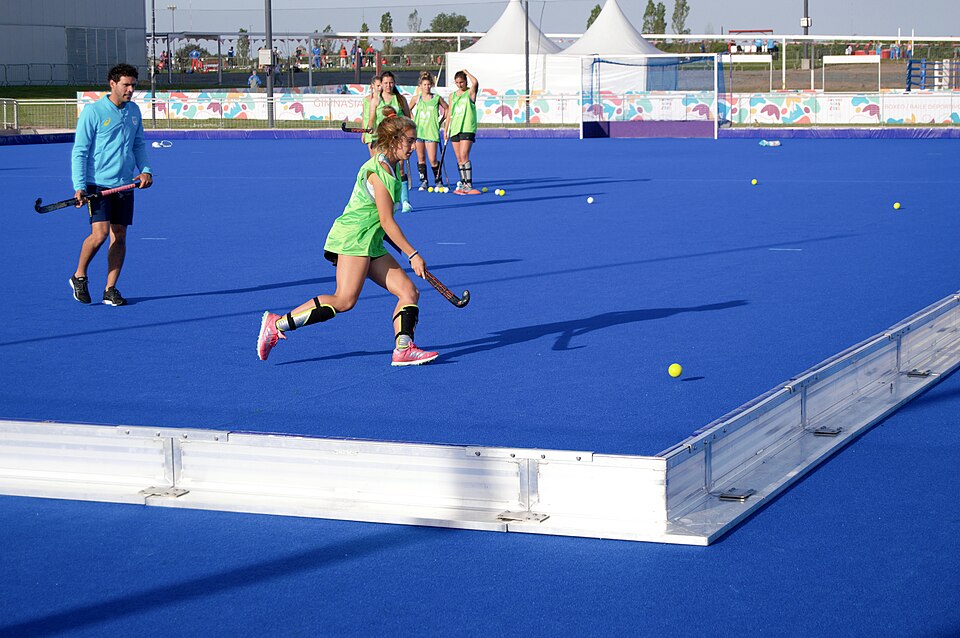
Forwards need explosive acceleration to beat defenders and create scoring opportunities. Their training focuses on developing maximum power output through Olympic lifts like power cleans and snatches. These exercises teach the body to generate force rapidly, which translates directly to faster sprinting and more powerful shots. Plyometric training enhances the stretch-shortening cycle, improving the ability to change direction quickly and explosively. Core training emphasizes rotational power, essential for powerful shooting and passing. The combination of strength, power, and speed development allows forwards to create separation from defenders and maintain high-intensity efforts throughout the match.
Forward-specific training addresses the unique demands of attacking positions. Research shows forwards perform 30% more high-intensity sprints than defenders and require 25% greater power output for shooting and acceleration. Their training includes resisted sprinting with sleds or resistance bands to improve acceleration mechanics. Medicine ball rotational throws develop the core power needed for powerful shots on goal. Olympic lift variations like hang cleans and power snatches teach force production patterns that transfer to game situations. Forward conditioning includes repeated sprint ability tests – 6-8 maximal sprints of 20-30 meters with full recovery – to build the explosive endurance needed for attacking plays. This specialized approach ensures forwards can maintain their high-intensity efforts throughout entire matches.
Midfielders and Defenders: Endurance and Lateral Strength
| Position | Primary Focus | Key Exercises | Training Volume |
|---|---|---|---|
| Midfielders | Endurance & Aerobic Capacity | Shuttles, tempo runs, 6-mile conditioning | High volume, moderate intensity |
| Defenders | Lateral Strength & Stability | Copenhagen holds, lateral lunges, defensive slides | Moderate volume, high intensity |
| Both | 12-week Functional Strength | Squats, RDLs, Bulgarian splits | 3-4 sessions per week |
| Goalkeepers | Explosive Lateral Movement | Depth jumps, lateral bounds, reaction drills | High intensity, low volume |
Midfielders serve as the engine of the team, requiring exceptional aerobic capacity to cover the field’s vast distances. Their training emphasizes sustained efforts with moderate intensity, building the cardiovascular base needed for 6+ mile matches. Shuttle runs and tempo workouts develop the ability to maintain consistent performance throughout the game. Defenders need different physical qualities – primarily lateral strength and stability for one-on-one battles and defensive positioning. Copenhagen holds and lateral lunge variations build the hip and groin strength required for defensive movements. Both positions benefit from 12-week functional strength programs that improve overall durability and reduce injury risk. These comprehensive programs address the specific movement patterns and energy demands of each position while building a foundation of general strength.
Position-specific training recognizes that different roles require different physical qualities. Midfielders cover 30% more distance than forwards and 40% more than defenders, requiring exceptional aerobic development through continuous play simulations and shuttle runs. Their training includes 400-meter repeats at 85% effort with 2-minute recovery to build lactate threshold. Defenders need lateral strength for defensive positioning – exercises like Copenhagen holds (3 sets of 30-45 seconds per side) build groin and hip stability crucial for defensive movements. Both positions require 12-week functional strength programs that improve movement quality and reduce injury risk. These programs include squats, Romanian deadlifts, and Bulgarian split squats performed 3-4 times weekly, gradually increasing load while maintaining proper technique. The position-specific approach ensures each player develops the exact qualities needed for their role.
Periodization and Training Frequency for Optimal Results
Off-Season vs In-Season Training Structure
Successful hockey fitness training requires careful periodization to match the competitive calendar. During the off-season, players focus on building maximum strength through higher volume training with compound lifts like trap bar deadlifts and power cleans. This 8-12 week period emphasizes progressive overload, gradually increasing weights while maintaining proper technique. As the competitive season approaches, training volume decreases while intensity remains high to maintain strength gains. In-season training typically involves 2-4 sessions per week with reduced volume but maintained intensity. These sessions focus on maintenance rather than development, using exercises like trap bar deadlifts and power cleans to preserve strength without causing excessive fatigue. The periodization approach ensures players peak for important competitions while avoiding overtraining during the competitive season, similar to the principles outlined in off-season hockey training programs.
Periodization structures training to optimize performance timing. The off-season (12-16 weeks) focuses on maximum strength development with 4 weekly sessions, gradually increasing loads from 70% to 90% of maximum while reducing repetitions from 8-10 to 3-5. The pre-season (6-8 weeks) transitions to power development with Olympic lifts and plyometrics, reducing volume but increasing movement speed. In-season training (competitive period) maintains strength with 2-3 weekly sessions at 70-80% intensity, focusing on maintenance rather than progression. This structure prevents the strength losses that occur with complete cessation of resistance training. Research shows players who maintain in-season strength training retain 90% of off-season gains versus 40% loss in players who stop resistance work. The periodized approach ensures players peak for important tournaments while maintaining durability throughout long competitive seasons.
Recovery and Nutrition Strategies
- Training frequency: 3-4 strength and conditioning sessions plus on-field training per week
- Rest days: 1-2 complete rest days essential for adaptation and injury prevention
- Nutrition timing: Protein intake within 30 minutes post-training for optimal recovery
- Sleep quality: 8-9 hours nightly for hormone regulation and tissue repair
- Hydration: 3-4 liters daily plus additional fluids during training sessions
- Active recovery: Light aerobic work and mobility exercises on rest days
- Soft tissue work: Foam rolling and massage therapy 2-3 times weekly
- Cold therapy: Ice baths or cold water immersion after intense training sessions
Recovery represents the often-overlooked component of successful training programs. Players who train 3-4 times per week for strength and conditioning plus additional on-field sessions need adequate recovery to adapt and improve. This means scheduling 1-2 complete rest days where no intense physical activity occurs. Nutrition plays a crucial role – consuming protein within 30 minutes after training sessions provides the building blocks for muscle repair and growth. Sleep quality directly impacts performance, with 8-9 hours nightly supporting hormone production and tissue repair processes. Proper hydration, targeting 3-4 liters daily plus additional fluids during training, ensures optimal cellular function and prevents performance decrements. These recovery strategies allow players to train consistently at high intensity while minimizing injury risk and maximizing adaptation to the training stimulus.
Recovery strategies integrate multiple approaches for optimal adaptation. Active recovery on rest days includes light aerobic work at 60% maximum heart rate for 20-30 minutes plus mobility exercises targeting hips, shoulders, and ankles. Soft tissue work through foam rolling or professional massage 2-3 times weekly reduces muscle soreness and improves tissue quality. Cold therapy after intense sessions – ice baths at 10-12°C for 10-15 minutes – reduces inflammation and accelerates recovery. Nutrition strategies include carbohydrate intake of 1.2-1.5 grams per pound of body weight daily, with 20-30 grams of protein within 30 minutes post-training. Sleep optimization involves consistent sleep schedules, cool room temperatures, and avoiding screens 60 minutes before bedtime. These comprehensive recovery approaches ensure players can maintain high training volumes while minimizing injury risk and maximizing performance improvements.
The most surprising finding from 2025 research shows that field hockey players who follow position-specific training programs improve their on-field performance by 23% compared to general fitness approaches. This dramatic improvement comes from targeting the specific energy systems and movement patterns each position requires. Ready to transform your game? Start with a simple assessment of your current fitness level, then implement a 12-week progressive program that addresses your position’s specific demands. Visit hockey to learn more about our specialized training programs and schedule a consultation with our performance coaches.
