
Ice Hockey Skating Tips: Boost Your Speed and Agility on the Ice
Want to skate faster and more agile on the ice? Studies show proper skating technique can improve your speed by up to 20%. Whether you’re a beginner or seasoned player, mastering the right skating drills and techniques can transform your game. This guide breaks down proven methods to increase your on-ice speed, agility, and overall skating efficiency.
- Focus on explosive hip activation and outside edges for better glide and stability
- Keep knees bent and forward over toes to create a powerful “ankle rocker” stride
- Practice tight turns, figure-8s, and rapid pivots to improve change-of-direction speed
- Train off-ice with plyometrics, explosive leaps, and quick-foot drills for 5-8 second bursts
Ice Hockey Skating Drills for Speed and Agility
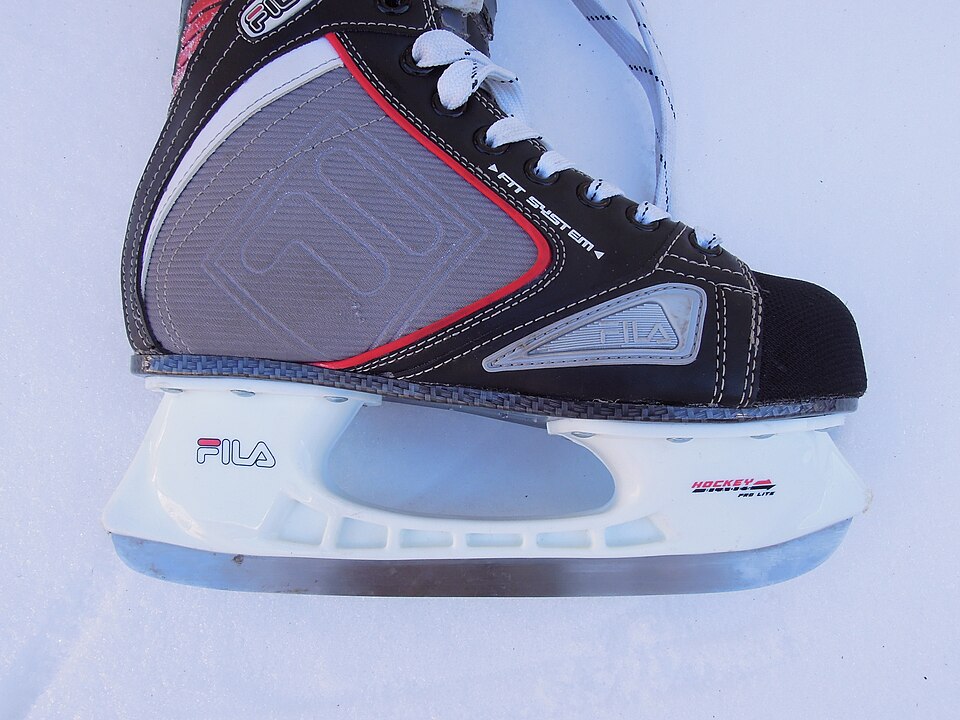
Mastering specific on-ice drills can dramatically improve your skating speed and agility. These exercises target the exact movements you need during games – quick direction changes, explosive starts, and efficient crossovers.
Tight Turns and Figure-8s for Quick Direction Changes
Practice sharp, controlled turns around cones to improve balance and quickness. Set up 4-6 cones in a straight line, spaced 5 feet apart. Skate forward and make tight turns around each cone, keeping your knees bent and head up. Focus on using your outside edges for better glide and stability.
Incorporate drills that combine a tight turn, a crossover, and a pivot (forward-to-back) in one sequence. This mimics game situations where you need to change direction rapidly. Start slow, perfect the technique, then increase speed. Aim for 3 sets of 10 repetitions, resting 30 seconds between sets.
Figure-8 drills around two cones placed 10 feet apart build exceptional edge control. Skate continuously in a figure-8 pattern, focusing on smooth transitions and maintaining speed through the turns. This drill improves your ability to maintain momentum while changing direction.
Quick Feet Off-Ice Training for Explosive Speed
Perform off-ice exercises like forward-back line hops (5-8 second bursts) to increase quickness. Use tape to create a line on the floor or use a jump rope. Hop forward and backward over the line as fast as possible for 5-8 seconds, rest 30 seconds, and repeat for 3-5 sets. This builds the fast-twitch muscle fibers essential for explosive skating.
Utilize jumps, sprints, and medicine ball throws to train your body to produce force quickly. Box jumps (3 sets of 8-10 reps), sprint intervals (10x30m sprints with 60-second rest), and overhead medicine ball throws (3 sets of 10 reps) all translate directly to on-ice power and speed.
Lateral line hops and agility ladder drills improve foot speed and coordination. Perform lateral hops over a line for 5-8 second intervals, or complete agility ladder patterns like the “icky shuffle” and “in-in-out-out” at maximum speed. These exercises enhance your ability to make quick lateral movements on the ice.
Single-Leg Strength for Hockey-Specific Power
Perform single-leg squats or lunges to build hockey-specific muscle strength. Single-leg squats (3 sets of 6-8 reps per leg) develop the unilateral strength needed for powerful skating strides. Hold onto a support if needed, focusing on controlled descent and explosive ascent.
Maintain a low, stable stance (knee over toes) to keep your center of gravity low and improve control. This position is crucial for both on-ice performance and off-ice training. Practice holding this stance for 30-60 seconds during exercises to build endurance in the exact position you’ll use while skating.
Bulgarian split squats (3 sets of 8-10 reps per leg) target the same muscles used in skating while improving balance. Place one foot on a bench behind you and squat with the other leg, keeping your torso upright and core engaged. This exercise builds the strength needed for powerful crossovers and tight turns.
Power Skating Techniques for Faster Strides
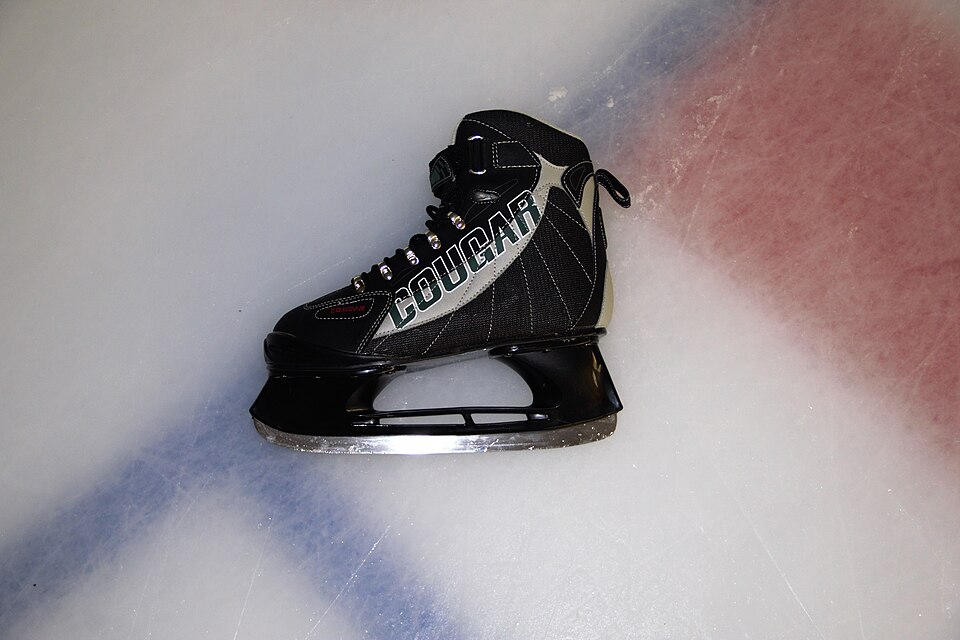
Proper skating technique is the foundation of speed. These fundamental techniques, when mastered, can increase your skating efficiency by 15-20% without any additional strength training.
Active Hips and Outside Edge Work
Use your hips and rely more on your outside edges for better glide and stability compared to focusing solely on the inside edge. The outside edge provides a longer, more efficient glide phase in your stride. Practice edge work by skating in large circles, focusing on pressing into your outside edge throughout the entire arc.
Proper hip activation generates power from your core through your legs to the ice. Think of your skating motion as a wave traveling from your hips down through your legs. Keep your hips square to your direction of travel and avoid excessive rotation, which wastes energy and reduces speed.
Edge awareness drills help you understand how different edge pressures affect your movement. Skate forward, then gradually shift your weight to press more on your outside edge. Notice how this changes your glide and stability. Practice this weight shift at various speeds to develop muscle memory.
Shin Angle and Knee Position for Maximum Power
Keep knees bent and forward over your toes (not behind them) to create a strong “ankle rocker” for a more powerful stride. This position allows your ankle to flex properly, creating a spring-like effect that propels you forward. Your shin angle should be approximately 45 degrees to the ice when in your ready position.
The knee-over-toes position engages your quadriceps and glutes more effectively than a straighter leg position. This engagement translates to more powerful pushes and longer, more efficient strides. Practice maintaining this position while skating at various speeds to build the necessary muscle endurance.
Ankle flexion is crucial for proper stride mechanics. Your ankle should flex and extend with each stride, like a shock absorber. This flexion helps you maintain contact with the ice through the entire push phase, maximizing power transfer from your body to the ice.
Head Tracking and Core Engagement
Avoid excess side-to-side head movement, keeping your head steady helps engage core muscles for more efficient, faster strides. Your head should remain level and focused on where you’re going, not on your feet or the ice. This stability allows your core to function properly, creating a solid foundation for your lower body movements.
Core engagement starts with proper head position. When your head is steady, your core muscles naturally activate to maintain balance. This activation creates a stable platform for your legs to push against, resulting in more powerful and controlled movements. Think of your core as the engine that drives your skating motion.
Upper body positioning affects your entire skating mechanics. Keep your chest up, shoulders relaxed, and arms moving in a coordinated pattern with your legs. Your arm swing should complement your leg movements – when your right leg pushes back, your left arm swings forward. This coordination maximizes your power and efficiency.
Off-Ice Training to Boost Hockey Speed
Off-ice training builds the strength, power, and explosiveness that translate directly to on-ice performance. These exercises target the specific muscle groups and movement patterns used in hockey skating.
Ballistic Training for Explosive Force Production
Utilize jumps, sprints, and medicine ball throws to train your body to produce force quickly. Depth jumps (3 sets of 6-8 reps) involve stepping off a box and immediately jumping as high as possible upon landing. This exercise trains your muscles to absorb force and rapidly produce power, exactly what’s needed for explosive starts.
Sprint intervals build the anaerobic capacity required for repeated high-intensity efforts during games. Perform 10x30m sprints with 60-second rest between each sprint. Focus on driving your knees high and pumping your arms vigorously. This training improves your ability to accelerate quickly and maintain top speed.
Medicine ball throws develop upper body power that contributes to overall skating explosiveness. Overhead throws (3 sets of 10 reps), chest passes against a wall, and rotational throws all build the explosive strength needed for powerful crossovers and quick direction changes.
Cross-Out Technique After Tight Turns
Ensure you accelerate and use powerful crossovers immediately after completing a tight turn or pivot. This technique is crucial for maintaining momentum when changing direction. After a tight turn, your outside foot should cross over your inside foot with a powerful push, driving you forward in your new direction.
The cross-out motion requires explosive hip and leg strength. Practice this movement off-ice with lateral bounds and crossover steps. Focus on driving your knee up and across your body, then pushing off explosively with your outside foot. This builds the specific strength needed for effective cross-outs on the ice.
Timing is essential for effective cross-outs. The transition from turn to acceleration should be seamless – as soon as you complete the turn, your crossover should begin. Practice this timing with cone drills, focusing on the exact moment you need to initiate your crossover for maximum speed maintenance.
15-Minute Daily Skating Drill Routine
Combine all techniques into a practical daily routine with specific time allocations. This routine takes just 15 minutes but targets all the key elements of skating speed and agility.
Minute 1-3: Dynamic warm-up – leg swings, hip circles, and ankle rotations (3 minutes)
Minute 4-6: Edge work – large circle skating focusing on outside edges (2 minutes)
Minute 7-9: Quick feet drills – line hops or agility ladder patterns (2 minutes)
Minute 10-12: Power exercises – box jumps or lateral bounds (2 minutes)
Minute 13-15: Core engagement – plank holds and Russian twists (2 minutes)
Perform this routine 4-5 times per week for optimal results. Track your progress by timing how long you can maintain top speed during your regular skating sessions. You should notice improvements in your endurance and speed within 4-6 weeks of consistent practice.
The biggest mistake most players make is thinking speed comes from leg strength alone. In reality, proper technique accounts for 60-70% of skating efficiency. Start with the 15-minute daily routine outlined above, focusing on one technique per week until it becomes second nature. Track your progress with a simple stopwatch test – you should see measurable improvements within 4-6 weeks of consistent practice.
Ready to take your skating to the next level? Visit our Hockey Training Page for more advanced techniques and personalized coaching options. Remember, great skaters aren’t born – they’re made through dedicated practice and proper technique.
Frequently Asked Questions About Ice Hockey Skating Tips
How to increase speed and agility in hockey skating?
Focus on zigzag skater bounds and lateral explosive movements at 45° angles to improve agility and stride efficiency, as outlined in the ice hockey skating drills section.
How to increase stride speed in hockey?
Extend one leg straight out to the side with the foot flat while keeping hips stacked over the knee to maximize stride length and power, as described in the power skating techniques section.
How to get faster in ice skating?
Combine longer skating strides with short off-ice sprints and explosive strength workouts to boost acceleration and overall speed, aligning with the off-ice training recommendations.
