
A standard field hockey team consists of 11 players: one goalkeeper and ten field players, typically structured into defenders, midfielders, and forwards (attackers). The primary goal of each role is to work together to control the midfield, defend the shooting circle, and create scoring opportunities.
Key Takeaway
-
Field hockey teams consist of 11 players: 1 goalkeeper and 10 field players structured into defenders, midfielders, and forwards
-
Each position requires specialized skills – goalkeepers need agility and communication, defenders need tackling and anticipation, midfielders need stamina and vision, forwards need speed and shooting accuracy
-
Modern formations like 3-4-3, 4-3-3, and 3-5-2 create different tactical approaches but all positions must work together to control midfield and create scoring opportunities
Field Hockey Positions: The Complete 11-Player Breakdown
Goalkeeper: The Last Line of Defense
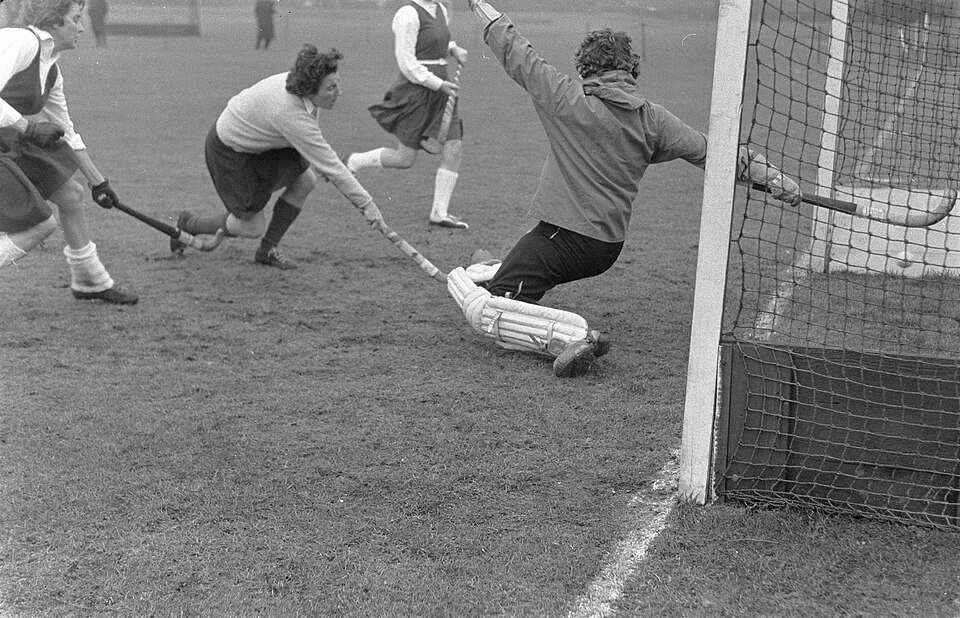
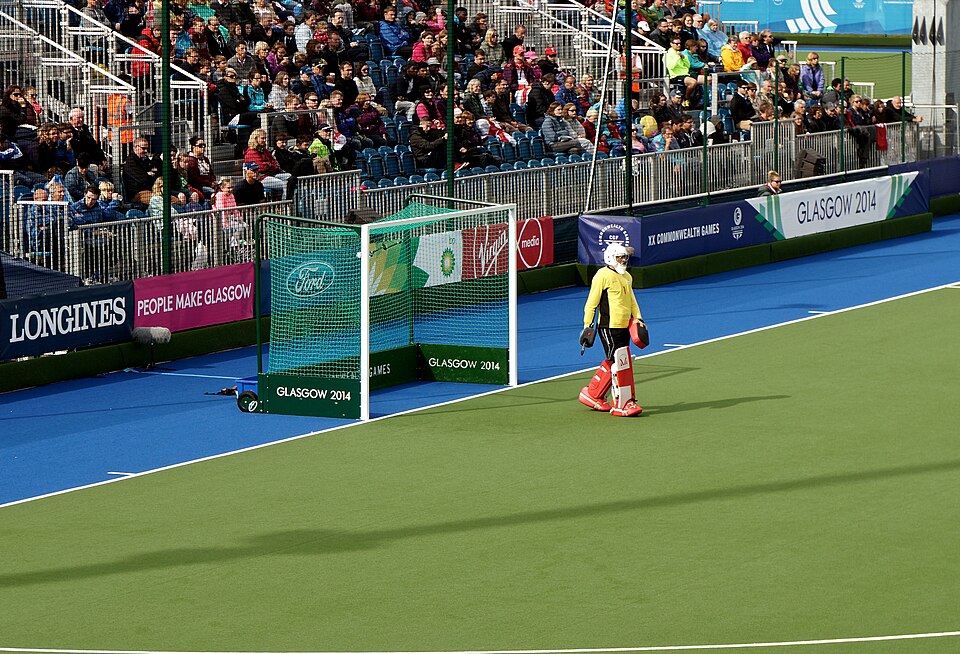
The goalkeeper stands as the final barrier between the opposing team and the goal cage, wearing specialized protective gear including helmets, leg guards, and chest protectors. Their unique position allows them to use their body to stop or propel the ball, but only within the shooting circle – a rule that distinguishes them from all other players on the field. Goalkeepers must possess exceptional agility to react to fast-moving shots, fearlessness to face powerful strikes, and quick reflexes to make split-second saves. Beyond physical skills, they serve as the team’s defensive coordinator, constantly communicating with defenders to organize the backline and direct coverage. A goalkeeper’s ability to read the game and anticipate opponent movements often determines whether a team maintains a clean sheet or concedes goals. Professional goalkeepers like Maddie Hinch (Great Britain) have revolutionized the position with their aggressive style and exceptional penalty-saving abilities, demonstrating how modern goalkeeping requires both technical excellence and psychological warfare against opposing shooters. The psychological aspect of goalkeeping cannot be overstated – goalkeepers must maintain composure under intense pressure, particularly during penalty corners where multiple shooters create overwhelming attacking scenarios. Their leadership extends beyond shot-stopping to include organizing defensive structures, directing traffic during chaotic situations, and providing vocal encouragement to teammates during challenging moments.
Defenders: Protecting the Shooting Circle
-
Four defenders form the backbone of the team’s defensive structure, positioned to protect the shooting circle and prevent opponents from getting close to goal
-
Primary responsibilities include tackling opposing forwards, marking key attacking players, and clearing the ball upfield to initiate counterattacks
-
Center-back (sweeper) acts as the deepest defender, mopping up any passes that break through the defensive line and providing an extra layer of security
-
Side-backs (left/right) manage wide play, supporting midfielders during transitions and preventing wingers from creating dangerous crossing opportunities
-
Key attributes include strong tackling ability, high endurance to maintain defensive pressure throughout the match, and the ability to read the game for interceptions
-
Tactical variations allow teams to adjust their defensive shape based on opponent strength, with some formations employing three central defenders for added security
-
Communication skills are crucial for defenders to coordinate marking assignments and maintain defensive organization, especially during penalty corners and set pieces
-
Modern defenders increasingly expected to contribute to attacking play by carrying the ball forward and making overlapping runs to support wingers
-
Positioning awareness determines defensive effectiveness, with top defenders constantly adjusting their angles to cut off passing lanes and force opponents into less dangerous positions
-
Anticipation skills allow defenders to intercept passes before they develop into scoring opportunities, requiring excellent game reading and opponent analysis
Midfielders and Forwards: The Engine Room and Scoring Threat
Midfielders: Linking Defense to Attack
-
Midfielders serve as the “engine room” of the team, connecting defensive efforts with attacking opportunities through their versatile skill set
-
Center midfielders often act as playmakers, dictating the tempo of the game, covering the most ground, and controlling possession in central areas
-
Left/right midfielders focus on flank play, supporting wingers in attack while also tracking back to assist fullbacks during defensive transitions
-
Key responsibilities include transitioning the ball from defense to attack, supporting forwards with through balls, breaking up opposition plays, and maintaining team shape
-
Essential attributes include outstanding stamina to cover extensive distances, passing accuracy to maintain possession under pressure, and vision to spot attacking opportunities
-
Modern midfielders increasingly required to hold high-endurance, box-to-box roles that demand both defensive discipline and attacking contribution
-
Technical skills such as 3D skills (lifting the ball over opponents) and elimination techniques are becoming increasingly important for midfielders to create space and break defensive lines
-
Decision-making ability under pressure distinguishes elite midfielders, who must choose between maintaining possession, launching quick attacks, or recycling play to reset the team’s shape
-
Work rate defines successful midfielders, who must maintain high intensity throughout the match while covering both defensive and attacking responsibilities
-
Spatial awareness allows midfielders to find pockets of space between opposition lines, creating passing options and disrupting defensive structures
Forwards: Scoring Goals and Creating Pressure
-
Forwards positioned furthest forward bear primary responsibility for scoring goals and maintaining pressure in the attacking third of the pitch
-
Center forwards/strikers serve as the main goal scorers, playing centrally near the opponent’s circle and acting as the focal point of attacking moves
-
Left/right wingers operate wide areas, using speed to beat defenders, create crossing opportunities, and stretch opposition defenses
-
Key responsibilities include scoring goals, creating scoring opportunities for teammates, pressing opposing defenders to force turnovers, and maintaining attacking intensity
-
Essential attributes include speed to exploit defensive gaps, agility to maneuver in tight spaces, shooting precision to convert chances, and the ability to “reverse press” by immediately chasing down opponents after losing possession
-
Modern forwards increasingly expected to contribute defensively, pressing high up the pitch to disrupt opposition buildup play
-
Movement patterns such as diagonal runs, third-man runs, and creating space for teammates are crucial for effective forward play
-
Finishing skills under various conditions (reverse stick, lifted shots, deflections) separate elite forwards from average players
-
Off-the-ball movement creates space and opportunities for teammates, requiring forwards to understand timing and defensive positioning
-
Physical attributes including acceleration, balance, and strength in holding off defenders are essential for modern forwards to maintain effectiveness throughout matches
Common Formations and Tactical Trends in 2026
Popular Formations: 3-4-3, 4-3-3, and 3-5-2
|
Formation |
Player Distribution |
Tactical Focus |
Key Characteristics |
|---|---|---|---|
|
3-4-3 |
3 defenders, 4 midfielders, 3 forwards |
Balanced approach |
Strong midfield presence, versatile attacking options, solid defensive foundation |
|
4-3-3 |
4 defenders, 3 midfielders, 3 forwards |
Attacking emphasis |
Only three defenders, strong midfield control, multiple forward options |
|
3-5-2 |
3 defenders, 5 midfielders, 2 forwards |
Defensive stability |
Five midfielders for control, two central forwards, solid backline |
2026 Tactical Trends: Versatility and Fluidity
Modern field hockey has evolved beyond rigid positional structures toward more fluid, dynamic systems where players interchange roles based on game situations. Midfielders increasingly required to hold high-endurance, box-to-box roles that demand both defensive discipline and attacking contribution. Specialized skills for carrying ball outside body for better vision and passing lanes have become essential as teams prioritize possession-based play. Formations are dynamic with defenders pushing up to support attacks and midfielders rotating between defensive and offensive responsibilities. The emphasis on versatility means players must develop well-rounded skill sets rather than specializing in single aspects of the game. Teams now prioritize players who can seamlessly transition between roles, creating unpredictable attacking patterns and maintaining defensive solidity through intelligent positional rotations. The 2026 international season has seen a marked increase in teams employing high-pressing systems, where forwards immediately pressure opposition defenders after losing possession, forcing turnovers in dangerous areas and creating quick counterattacking opportunities. This tactical evolution reflects the sport’s increasing emphasis on fluidity and adaptability, with successful teams demonstrating the ability to switch between multiple formations during a single match based on game circumstances and opponent weaknesses.
The most surprising finding in modern field hockey is how the traditional positional boundaries have blurred, with players expected to contribute across multiple phases of play regardless of their designated role. A defender might push forward to create attacking overloads, while a forward drops deep to help maintain possession. This tactical evolution reflects the sport’s increasing emphasis on fluidity and adaptability. To immediately improve your understanding of field hockey positions, watch a professional match focusing on one specific position throughout the entire game – observe how that player’s responsibilities change between attacking and defensive phases, and note how they communicate with teammates to maintain team structure.
Frequently Asked Questions About Field Hockey Guide Positions Explained
Where do you put your strongest player in field hockey?
Traditionally at youth levels the strongest players tend to play centrally, so in the midfield and in the centre if they play up front or at the back. It's common to see a good young player play centrally to control the game and influence both defense and attack.
What position should I play in field hockey?
The midfielders are the most versatile players on the field. They contribute both to the offense and defense. The defenders are primarily responsible for the defense. The deepest defending back may be the last line of defense.
Where to put the weakest player in hockey?
Weaker defense or midfielders on the right side (forehand techniques). Weaker attack player on the right side to minimize defensive exposure. This placement helps balance the team while protecting weaker players.
