
Field hockey demands a unique blend of speed, strength, and endurance that sets it apart from other sports. Unlike soccer or basketball, field hockey requires players to perform repeated high-intensity bursts lasting 10-30 seconds, followed by brief recovery periods. This guide breaks down the exact conditioning methods used by professional players to build the explosive power and stamina needed for game-day performance.
Key Takeaway
-
Field hockey requires high-intensity interval training, not long-distance running
-
10-30 seconds of max-effort sprinting followed by active recovery mimics game intensity
-
5 structured sessions per week including intervals, strength, and plyometrics is optimal
-
Lower body strength training prevents hamstring and ankle injuries common in field hockey
Why Field Hockey Needs High-Intensity Interval Training

The Science Behind Hockey Conditioning: 10-30 Second Sprints
Field hockey is fundamentally different from endurance sports because it’s built on non-stop high-intensity bursts. The game demands a unique mix of aerobic and anaerobic capacity, where players must repeatedly sprint at maximum effort for 10-30 seconds, then recover briefly before the next burst. This pattern mirrors the actual game flow, where players chase the ball, make quick directional changes, and engage in short but intense physical contests. The 10-30 second sprint structure isn’t arbitrary—it’s based on the average duration of hockey plays and the recovery time between them. This interval approach trains your body to handle the specific demands of field hockey rather than building general endurance that doesn’t translate to game performance.
Research shows that field hockey players cover approximately 8-10 kilometers per match, but the key difference is how that distance is accumulated. Instead of steady-state running, players perform around 300-400 high-intensity actions per game, including sprints, tackles, and rapid directional changes. The work-to-rest ratio typically falls between 1:2 and 1:4, meaning for every second of high-intensity effort, players have 2-4 seconds of lower-intensity activity or complete rest. This specific energy system development is why traditional long-distance running often fails to improve hockey performance—it trains the wrong energy pathways and movement patterns.
Game Simulation: Shuttle Runs and Beep Tests
-
Beep tests improve acceleration and deceleration by forcing players to reach markers before audio cues, mimicking the urgency of game situations
-
Shuttle runs enhance turning ability and quick directional changes essential for evading opponents on turf
-
Both drills develop the anaerobic capacity needed for repeated high-intensity efforts throughout a match
-
Shuttle runs specifically train the stop-start nature of hockey, where players constantly change direction while maintaining speed
-
Beep tests build mental toughness by pushing players to maintain pace as the intervals get progressively shorter
-
Multi-directional shuttle drills prepare players for the 45-degree cuts and lateral movements common in defensive positioning
-
Timed interval shuttles can be customized to match specific position demands, with midfielders doing longer distances than forwards
Complete 5-Day Field Hockey Training Program
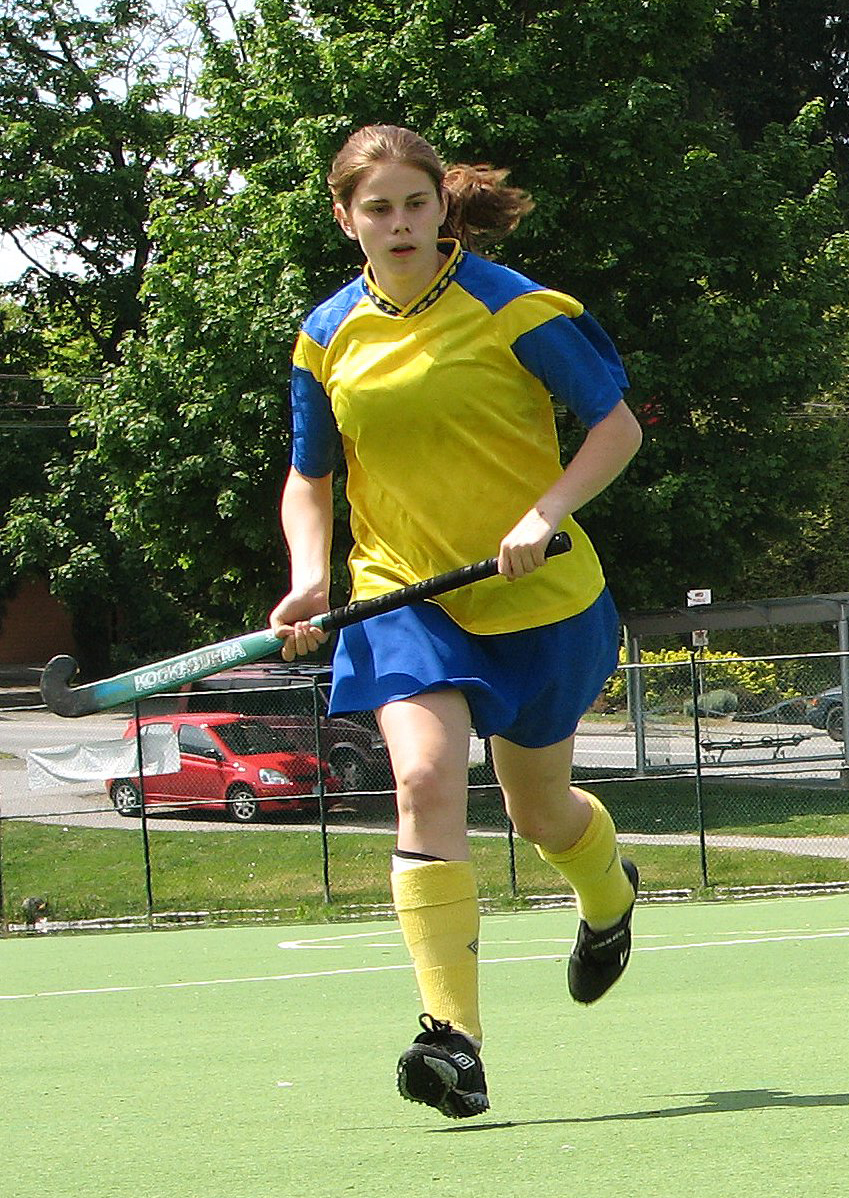
Weekly Structure: 5 Sessions Plus Game Day
|
Day |
Session Type |
Focus |
Duration |
Key Exercises |
|---|---|---|---|---|
|
Monday |
Intervals |
High-intensity sprints |
45-60 minutes |
10x30s max sprints, 90s recovery |
|
Tuesday |
Total Body Strength |
Compound lifts |
60-75 minutes |
Squats, deadlifts, bench press |
|
Wednesday |
Plyometrics |
Explosive power |
45-60 minutes |
Box jumps, depth jumps, lateral hops |
|
Thursday |
Aerobic Conditioning |
Recovery run |
30-45 minutes |
Steady-state jog, 60-70% max HR |
|
Friday |
Agility/Speed |
Ladder drills |
45-60 minutes |
Ladder drills, cone drills, T-drills |
|
Saturday |
Game/Match |
Competition |
90+ minutes |
Full match simulation |
|
Sunday |
Rest/Active Recovery |
Light activity |
30 minutes |
Walking, stretching, yoga |
This structured approach ensures comprehensive development across all physical qualities needed for field hockey. The interval training builds the anaerobic capacity for repeated sprints, while strength training provides the foundation for powerful movements and injury prevention. Plyometrics develop the explosive power for quick starts and aerial challenges, and agility work sharpens the directional changes that separate good players from great ones. The aerobic conditioning session serves as active recovery while maintaining cardiovascular base fitness, and game day provides the sport-specific application of all training qualities.
Pre-Season Preparation: Individual Position Training
-
Midfielders need higher aerobic capacity and should focus on longer intervals with shorter rest periods, such as 400-meter repeats at 85% effort
-
Forwards benefit from explosive sprint training and should emphasize 10-20 meter maximum effort runs with full recovery between efforts
-
Defenders require strength and agility work, combining weight training with lateral movement drills like defensive shuffle patterns
-
Combine conditioning with ball control drills to ensure skills remain sharp under fatigue, such as dribbling through cones during recovery periods
-
Schedule workouts during cooler parts of the day to prevent heat-related performance drops, especially important for pre-season training
-
Work out with a teammate for motivation and safety, especially during early pre-season training when fitness levels are still developing
-
Gradually increase training volume by no more than 10% per week to prevent overuse injuries during the build-up phase
Strength and Power Training for Field Hockey Success

Lower Body Strength: Squats, Lunges, and Deadlifts
-
Squats build the powerful strides needed for sprinting and changing direction on turf, with back squats being particularly effective for overall leg development
-
Lunges develop single-leg strength crucial for the unilateral movements common in hockey, including walking lunges and Bulgarian split squats
-
Deadlifts strengthen the posterior chain, protecting against hamstring injuries that plague field hockey players, with Romanian deadlifts being especially beneficial
-
Lower body strength training enhances power for striking the ball and improves overall stability during physical contests
-
These exercises also protect against ankle injuries by strengthening the muscles around vulnerable joints, particularly the tibialis anterior and calf complex
-
Single-leg exercises like step-ups and single-leg Romanian deadlifts address the imbalance between dominant and non-dominant sides common in hockey players
-
Proper squat depth and technique are crucial, as partial squats don’t provide the same functional benefits for hockey-specific movements
Upper Body and Core: Push-Ups, Rows, and Planks
Upper body and core training directly translates to better field hockey performance through improved ball shielding and stick power. Push-ups develop the chest and shoulder strength needed for physical battles along the boards and when protecting the ball from defenders. Rows strengthen the back muscles essential for maintaining posture during tackles and generating power through the stick. Planks and other core exercises create a stable base for all movements, allowing players to transfer power efficiently from their legs through their upper body. This core stability is particularly important when making quick turns or absorbing contact from opponents.
The rotational power developed through core training is especially valuable for hockey players, as many movements involve twisting through the torso. Medicine ball rotational throws and cable wood chops mimic the rotational forces experienced during shooting and passing. Upper body pulling exercises like chin-ups and inverted rows balance the pushing movements and help prevent shoulder injuries common in overhead sports. The combination of upper body pushing, pulling, and core stability creates a well-rounded foundation that enhances every aspect of field hockey play, from defensive positioning to offensive shooting power.
Explosive Power: Plyometrics and Jump Training
-
Jump squats develop the explosive leg power needed for quick starts and aerial ball challenges, with depth jumps adding reactive strength components
-
Box jumps improve vertical leap ability for overhead ball contests and jumping tackles, with height progression based on individual capability
-
Depth jumps enhance reactive strength, allowing faster ground contact times during sprints and improving overall speed
-
Plyometric training translates directly to on-field performance by improving acceleration and deceleration, particularly important for defensive positioning
-
These exercises should be performed with proper form to prevent injury and maximize power development, starting with basic jumps before progressing to more complex movements
-
Single-leg plyometrics address the unilateral nature of hockey movements and help correct strength imbalances between legs
-
Bounding exercises develop the elastic qualities needed for repeated explosive efforts throughout a match
The most surprising finding in field hockey conditioning research is that players who follow structured high-intensity interval training programs improve their game performance by up to 30% more than those who simply run long distances. This dramatic difference occurs because hockey-specific training develops the exact energy systems and movement patterns used during actual matches. To get started immediately, replace your next long run with 10 sets of 30-second maximum effort sprints followed by 90 seconds of walking recovery. This single change will begin training your body for the real demands of field hockey competition.
Frequently Asked Questions About Field Hockey Guide Fitness
What is the best conditioning for field hockey?
Plyometric Training. Plyometric exercises, which involve explosive movements like jumps, bounds, and hops, help field hockey players develop the power and agility needed for quick, sharp movements on the field, as outlined in the Wednesday training session focusing on explosive power.
How do you get fit for field hockey?
Exercises such as squats, lunges, and push-ups will enhance your power on the field and reduce injury risk. Agility and Speed: Incorporate agility drills such as ladder drills, cone drills, and shuttle runs, which are part of the Friday agility/speed session in the training program.
What is the hardest skill in field hockey?
3D skills also known as lifts, jinks, or pops, are some of the hardest skills to defend against and can be used by all outfield positions. Mastering these requires the explosive power and agility developed through plyometric and agility training sessions.
